
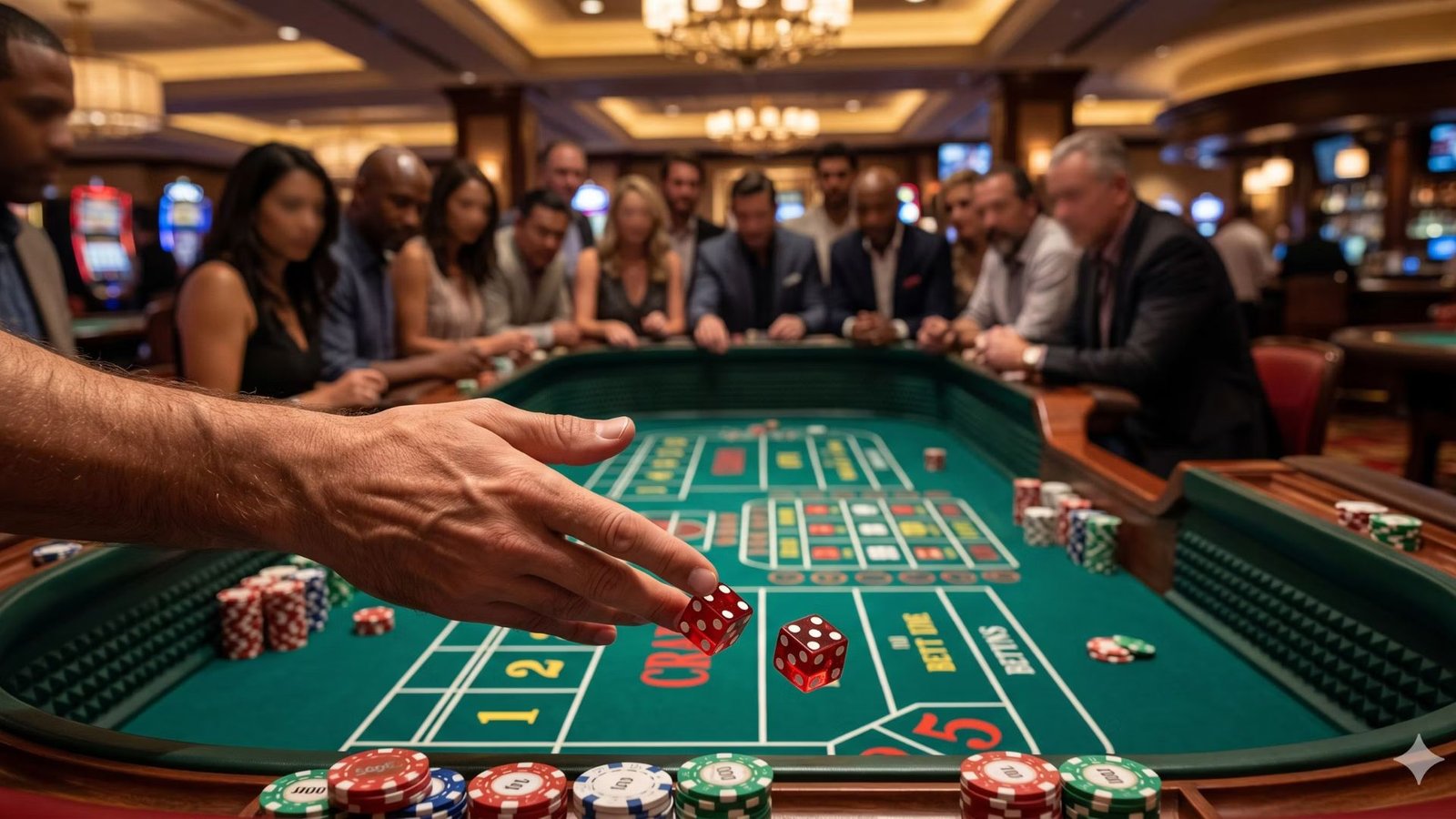
Walking onto a casino floor feels electric. Flashing lights and spinning wheels promise endless possibilities. However, behind this glamorous facade lies a cold, calculating reality. The table game house edge dictates every outcome, ensuring the casino always profits over time. You might win today, and you might win tomorrow. Eventually, the math catches up. Therefore, understanding this built-in tax is essential for any modern player.
Casinos do not rely on luck to make money. Instead, they rely on statistics and probability. Every single wager carries a slight mathematical defect for the player. Consequently, the payouts are always slightly less than the true odds of winning. Maybe you usually prefer sports markets. In that arena, you might study a soccer betting guide to find true value against the bookmaker. Casino pits operate differently, as the odds are fixed by rigid rules.
Think of the edge as a small fee. You pay this fee for the entertainment of playing. For instance, a 5% edge means you lose five dollars for every hundred wagered on average. Short-term variance allows for massive winning streaks, keeping players coming back for more. Long-term variance always curves toward the mathematical expectation. Understanding this separation between short-term luck and long-term math is vital.
Peeling Back the Curtain: Demystifying the Table Game House Edge
Why do some games drain your bankroll faster than others? The answer lies in the specific rules of each game. The table game house edge varies wildly across the casino floor. Some bets give the house a massive 15% advantage, whereas other games shrink it to under half a percent.
Choosing the right game completely changes your expected longevity. Therefore, smart players memorize which games offer the lowest mathematical barriers.
Roulette provides a perfect baseline for understanding this concept. A standard European roulette wheel features 37 pockets. These include the numbers one through 36 and a single green zero. If you bet on a single number, the true odds are 36 to one against you. However, the casino only pays out 35 to one. This missing unit creates the profit margin, silently funding the entire operation.
The American and Triple Zero Trap
American roulette takes this baseline and makes it significantly worse. The American wheel adds a double zero pocket, bringing the total to 38 pockets in play. Suddenly, the true odds are 37 to one against hitting your number. The payout remains the same at 35 to one. Furthermore, this subtle change nearly doubles the casino’s advantage. The mathematical hurdle jumps from 2.7% to a staggering 5.26%.
Some upscale properties in 2026 even offer triple zero roulette. This version adds a green zero, double zero, and a logo pocket. Consequently, the casino edge balloons to an astonishing 7.69%. Players flock to these tables simply because the minimum bets are lower. Mathematically, you are paying a massive premium for that lower minimum. Therefore, you should avoid triple zero wheels completely.
Blackjack Decisions: Skill Against the Casino
Blackjack remains a favorite because players actually make decisions. Your choices directly impact the mathematical outcome of the hand. Playing blindly creates a massive disadvantage. Conversely, following a mathematically proven basic strategy changes everything.
-
Always split Aces and eights to maximize value.
-
Double down on eleven when the dealer shows a lower card.
-
Stand on seventeen and above regardless of dealer upcard.
Following these rules rigorously minimizes the casino’s advantage. With perfect play, standard blackjack rules yield an incredibly low edge. The house often holds an advantage of roughly 0.5% in these scenarios. This makes it one of the fairest games available. However, players rarely play perfectly, as gut feelings often override mathematical logic. Standing on a 16 against a dealer’s 10 feels safer. Mathematically, it is actually a guaranteed way to lose more money over time.
How 6 to 5 Payouts Ruin the Table Game House Edge
Modern casinos have found sneaky ways to claw back their advantage. The most egregious change is altering the payout for a natural blackjack. Historically, a winning blackjack paid 3 to 2, but today many tables only pay 6 to 5. This single rule change completely destroys the favorable table game house edge. It adds about 1.4% directly to the casino’s overall advantage. Let us look at the real-world impact. A ten-dollar bet historically paid fifteen dollars, whereas on a modern table, it pays twelve.
Baccarat and the Illusion of Choice
Baccarat seems intimidating due to its high-roller reputation and complex card drawing rules. Fortunately, the player makes no actual playing decisions after placing a bet. You simply choose to back the Banker, the Player, or a Tie. The dealer handles all the complicated math and card drawing automatically. This makes baccarat exceptionally easy to play. Furthermore, the mathematical disadvantage is quite low for the main bets.
The Banker bet holds a tiny advantage of just 1.06%. The Player bet is nearly as good with a 1.24% advantage. Because the Banker wins slightly more often, the casino charges a 5% commission on winning Banker bets. Even with this commission factored in, the Banker remains mathematically superior.
The Danger of the Lucrative Tie Bet
Every baccarat table tempts you with a lucrative Tie bet. It usually pays 8 to one or sometimes 9 to one. However, this wager hides a mathematical nightmare. The casino’s advantage on the Tie bet frequently exceeds 14%. Over hundreds of hands, this massive margin will inevitably drain your chips. Therefore, smart players completely ignore the Tie circle, sticking exclusively to Banker or Player wagers. This discipline separates professional gamblers from casual tourists.
Carnival Games: High Payouts and Hidden Margins
Modern casino pits feature rows of proprietary poker-style games. Three Card Poker and Mississippi Stud dominate these areas. These games offer the tantalizing promise of massive jackpot payouts. Sadly, these massive payouts fund a significantly higher built-in advantage. The base games usually carry edges between 2% and 5%. The real danger lies in the optional side bets, which dealers constantly encourage you to play. A dollar on the progressive jackpot sounds harmless, yet these wagers represent the highest margins in the building.
Managing Your Bankroll Against the Math
You cannot defeat the math without legally counting cards. However, you can manage how the math impacts your wallet. Bankroll management is your best defense against negative expectation. First, you must accept that the casino has an unbeatable advantage. Treat your gambling budget strictly as an entertainment expense. Never gamble expecting to pay your rent or bills. Consequently, you will enjoy the experience much more.
Slowing down your play also extends your entertainment time. The math only grinds your money away when you actively make bets. Playing at a crowded table naturally reduces the number of hands per hour. Additionally, skipping side bets drastically reduces your hourly expected loss. Your goal should be maximizing fun while minimizing mathematical exposure.
Realistic Expectations for 2026 Gamblers
The gambling industry has optimized its revenue models extensively. Finding a fair game requires actual effort and research. You must scout the pit before exchanging cash for chips. Look for single zero roulette wheels. Check the felt for 3 to 2 blackjack payouts. Ignore the flashy carnival games with massive progressive meters.
Ultimately, table games offer thrilling entertainment and social interaction. A hot run of cards feels genuinely magical. You just need to respect the underlying arithmetic governing the outcomes. The table game house edge never sleeps and never takes a break. By understanding the math, you strip away the illusions. Enjoy the thrill, but always protect your bankroll.